
1771 Sensitivity Supertest by Health At Home | Comprehensive Hair Analysis
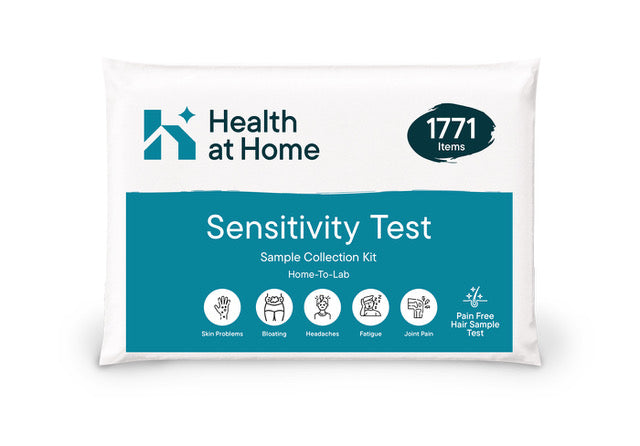
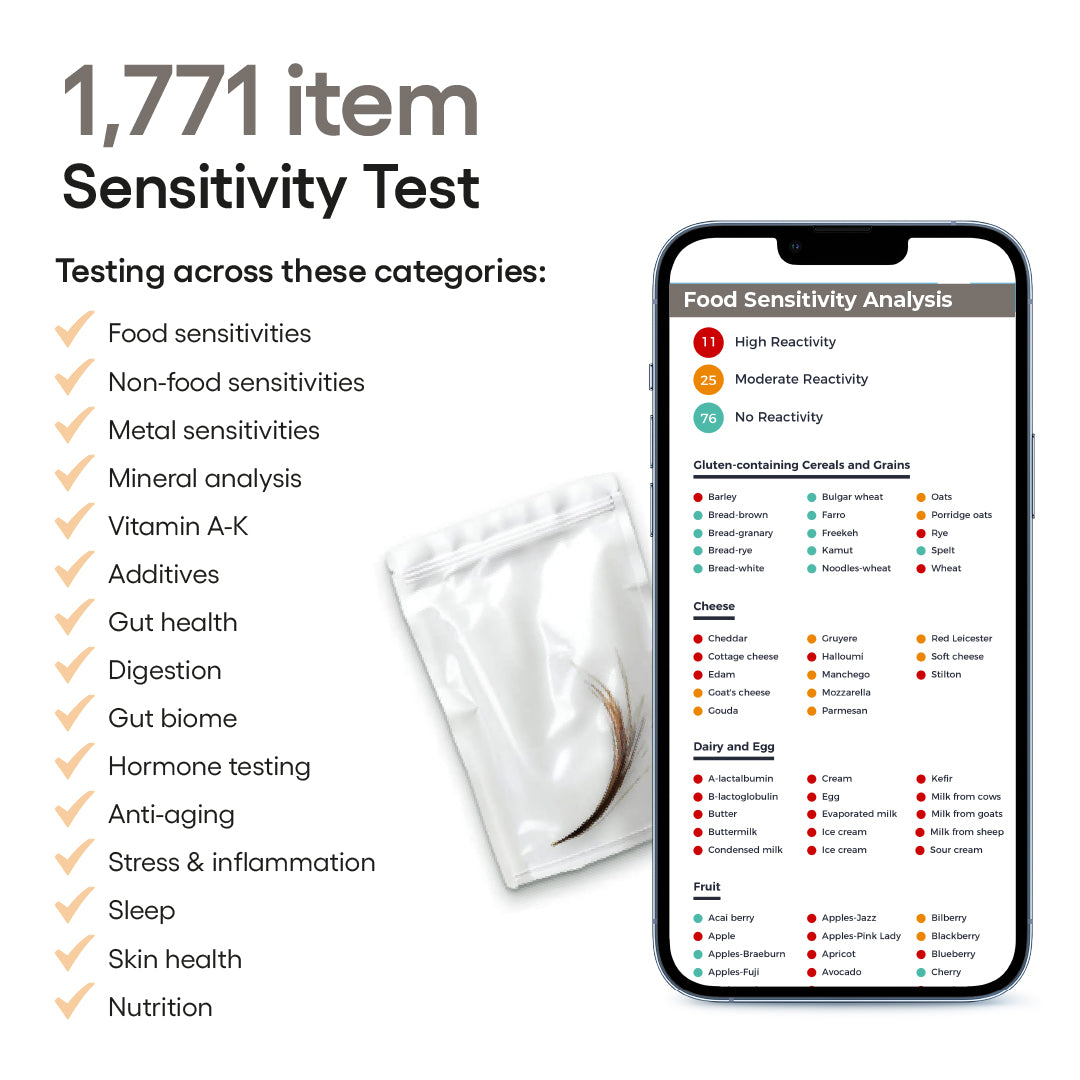
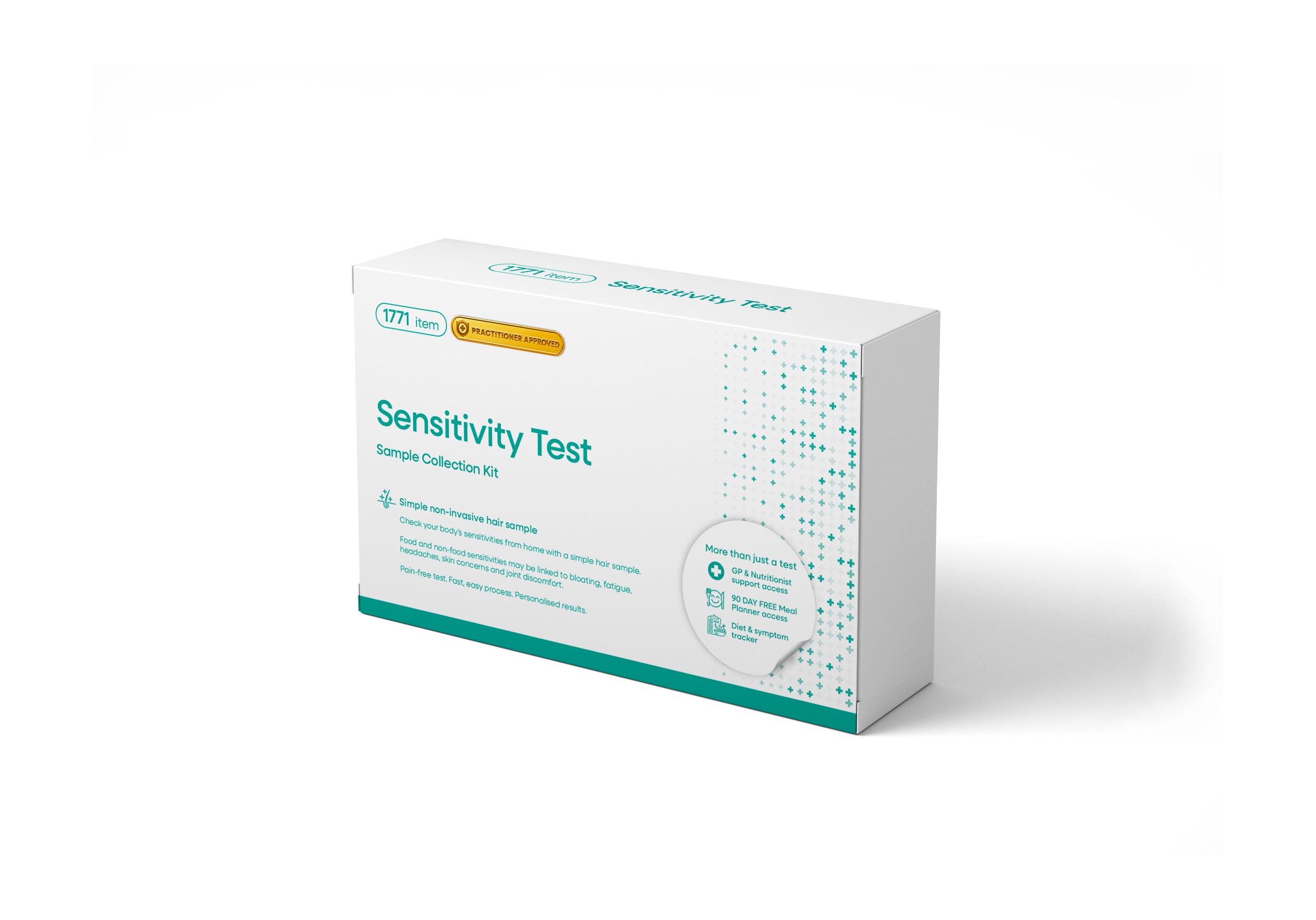
Our 1771-item Supertest uses a small hair sample to identify sensitivities to foods, drinks, and environmental factors that may be contributing to symptoms such as nausea, bloating, fatigue, headaches, and digestive discomfort.
Your results are presented in a clear, easy-to-understand colour-coded report, complete with practical recommendations and a straightforward action plan to help you make informed lifestyle choices.
In addition to sensitivity testing, the report highlights potential imbalances across key areas of health, including vitamins, minerals, gut health, cortisol levels, collagen, and more, providing a broader overview of your wellbeing.
Anyone experiencing digestive symptoms such as nausea, bloating, stomach discomfort, or irregular digestion Individuals struggling with weight management or unexplained weight fluctuations Those dealing with skin concerns such as acne, eczema, or psoriasis Anyone looking for a comprehensive wellness check to better understand their body and improve overall wellbeing Individuals experiencing low energy levels, fatigue, or a lack of vitality
- 🧬 Food Sensitivities
- 🌿 Non-Food Sensitivities
- ⚙️ Metal Sensitivities
- 🧪 Mineral & Vitamin Analysis (A–K)
- 🚫 Additives & Preservatives
- 🧠 Hormones, Stress & Inflammation
- 🦠 Gut Health & Biome
- 🍽️ Digestion & Nutrition
- 😴 Sleep
- 💆♀️ Skin Health & Anti-Aging
Get answers in 3 easy steps...
Order Kit
Place your order and we will send your test kit to your specified address promptly.
Submit Sample
Take your hair sample and return it to our laboratory using our pre-paid envelope.
Results
Receive your comprehensive test results digitally within 72 hours.
Frequently asked questions
-
Hair samples are analysed using bioresonance testing, which assesses energetic responses to a range of foods, substances, and environmental factors to identify potential sensitivities.
-
Bioresonance testing compares the energetic frequencies of a hair sample against a database of foods, nutrients, and other substances to identify potential sensitivities and imbalances.
-
Bioresonance testing provides a non-invasive, affordable starting point for identifying potential sensitivities. It is a complementary therapy and is not intended to diagnose medical conditions.
-
No. This test identifies potential sensitivities, not allergies. Allergies involve an immune response and require medical testing.
-
The test does not assess allergies. A food may show no sensitivity while still causing an allergic reaction. Known allergens should never be reintroduced without medical guidance.
-
No. This test cannot diagnose lactose intolerance, coeliac disease, allergies, or any medical condition.
-
- High Reactivity (Red): Consider eliminating for 6–8 weeks before gradual reintroduction.
- Moderate Reactivity (Orange): May contribute to symptoms; consider removing for 4–6 weeks.
- No Reactivity (Green): No sensitivity detected.
- Out of Range: Falls outside optimal testing parameters.
-
Follow the recommended elimination period, then reintroduce foods one at a time while monitoring symptoms.
-
Remove all high and moderate reactivity foods, then reintroduce them individually every few days while tracking symptoms.
-
Sensitivities may improve with dietary and lifestyle changes. Re-testing is typically recommended after 2–3 years or following significant health or lifestyle changes.